HOUSES OF WORSHIP
By Paul S. Coakley
The Catholic Church declared Archbishop Fulton Sheen “ blessed” in St. Louis on Thursday, placing him one step away from becoming the first bishop born in America to be canonized a saint.
America’s bishops have much to learn from Sheen’s witness. Like Sheen (1895-1979), we are living in a time of rapid technological change. He saw the explosion of television into the mainstream of national culture, and we have experienced the explosion of social media and the rise of artificial intelligence. We share a similar responsibility to employ emerging technologies to inspire hearts and minds.
And now we have an American Blessed as both our role model and intercessor.
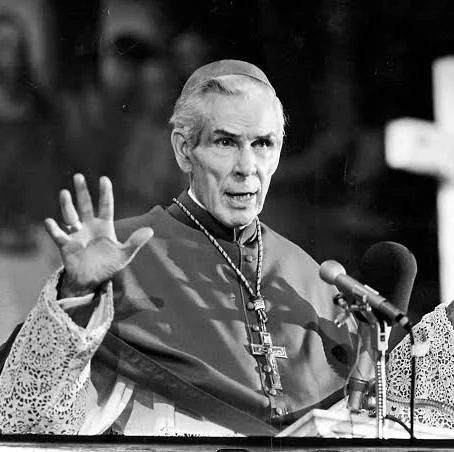
When Sheen appeared in his Emmy-winning show, “Life is Worth Living,” from 1952 to 1957, he was an auxiliary bishop in New York. He proved a natural for the medium: handsome with a beautiful voice and mesmerizing eyes. Sheen used no props except a chalkboard and chalk. He focused on such serious topics as philosophy, history and religion. He rarely, if ever, used notes.
“Life is Worth Living” routinely drew up to 30 million weekly viewers, becoming for a time the most popular television show in the country.
Through both the show and his real-world ministry, Sheen inspired countless conversions.
Every bishop today wants to know Sheen’s secret. How did he enrapture millions of souls despite political, religious and geographical differences? How did he win converts while being outspoken about controversial truths?
The answer can primarily be found in Sheen’s prayer life, which inspired genuine love for his fellow human beings. On the day of his ordination in 1919, Sheen committed himself to a daily hour of prayer. He kept this promise until the day he died in 1979, despite a hectic schedule and major pastoral responsibilities. Sheen was so faithful to this promise that he drew his last breaths before the Eucharist.
He urged lay and religious Catholics to engage in this daily devotion, which he believed was essential for developing a personal relationship with Christ. “The only way to know a friend is to spend time with him,” he wrote.
Sheen’s love for the Eucharist was the spring from which his genius flowed. It is also likely the reason that Sheen connected deeply with nearly everyone he encountered, drawing an estimated 42,000 souls to the Catholic Church. He saw Christ in them.
Sheen’s power to sway souls even helped save the Catholic Church from those who tried to destroy it from within. In 1950 he met with the extremist Bella Dodd just as she was beginning an insidious plot to corrupt Catholic seminaries with Communist seminarians.
This meeting changed Dodd’s life. The unlikely pair’s conversation ultimately led to both kneeling “on our knees before the Blessed Mother in the little chapel,” as she put it.
Sheen breathed hope into Dodd’s soul, reminding her that protecting those she loved required adherence to God’s law first. The fruits of this conversation led to Dodd’s baptism at Saint Patrick’s Cathedral in 1952.
Sheen’s love for both God and man helped Americans accept the hard truths he boldly proclaimed. His critiques of both communism and unrestrained capitalism stemmed from his dismay that each of them undermined the dignity of human beings created in God’s image.
He wasn’t afraid to use his television program and bestselling books to condemn sins against human dignity and violations of the natural law. His ability to speak the truth in love didn’t cause listeners to try to silence him. It earned him the admiration of leaders around the world.
When Sheen did encounter diverging opinions, his profound humility and willingness to admit mistakes only increased the respect his contemporaries had for him. As the bishop of Rochester from 1966 to 1969, he made some decisions that drew criticism, even hostility, from members of the diocese. Sheen met these disagreements with grace. In some cases, he changed course after hearing the alternative view. In 1969, Sheen made the difficult decision to resign when he felt that the diocese no longer had confidence in his mission there.
My fellow American bishops and I face a landscape like that in which Sheen lived: new platforms, pressure to be popular rather than faithful, political and religious division, and an uncertain future.
Our job is to be like Sheen— to wade through the strife with courage, clarity and heartfelt concern for the souls entrusted to our care. Sheen showed us how to proclaim the truth with love. He teaches us to meet defeat with humility and surrender. He inspires us with his genius for evangelization and new media.
Most important, Sheen reminds us that the best way to ignite souls for Christ starts with the practice he faithfully kept: a daily hour before Our Lord in the Eucharist.
Archbishop Coakley is the president of the U.S. Conference of Catholic Bishops.